Brand
SanDisk: Internal SSDs
- Memory cards for sale
- 14-day right of return
- QuickFlow™ Technology

Why choose SanDisk?
In the world of memory cards, SanDisk is mainly a practical choice when storage must not be a bottleneck: the camera has to write files to the card at a steady pace, and afterwards moving the material to a computer has to be smooth. Many users associate the SanDisk name with photo and video workflows, where speed classes and UHS support make a concrete, measurable difference. The brand's advantage is clear series logic, which helps you quickly work out whether you need an everyday card or something that can withstand longer recordings and more intensive use. In addition, several series emphasise durability, for example resistance to water, shocks, X-rays and temperature, which is valuable when travelling, working outdoors, or using a drone or action camera.
SanDisk range in our e-shop
At the Ruumist Ruumi e-shop you will find SanDisk camera memory cards in several dozen products, so you can choose exactly what suits your device and use. The range includes full-size SD cards (SDHC, SDXC) as well as microSD cards (microSDHC, microSDXC), in many cases with an SD adapter, which makes microSD easy to use in devices with an SD slot too. The most common series are SanDisk Ultra, SanDisk Extreme and SanDisk Extreme PRO: Ultra suits everyday photography and general use well, Extreme is aimed at faster work and 4K recording, and Extreme PRO is the choice when you want the most from the card's performance, for example with larger files, longer clips or higher frame-rate shooting.
If your camera or card reader supports faster interfaces, it is also worth noting the UHS-II SDXC variants, which are designed for higher throughput. On the upload side, some products show SanDisk QuickFlow™ Technology references, intended to speed up your workflow, mainly if you use a compatible card reader. Product pages also show protection features (for example waterproof, X-ray proof, shock-proof) and capacities, so you can decide whether longer recording time or spreading risk across smaller cards is the priority.
What to consider when choosing a SanDisk product?
Start with compatibility: check whether your camera uses the SD or microSD format and whether it supports the SDHC or SDXC standard. If the device supports UHS-II, a UHS-II card delivers its best result only if the card reader and workflow (for example the USB interface) do not limit the speed. Often the speed class matters more than the speed figures: for video, look for the Video Speed Class markings (for example V30 or V90), which indicate the minimum sustained write speed, and the UHS marking (U1 or U3), which is also related to write performance. In photography, the speed at which the camera buffer empties and how many burst shots you take also play a role.
Then choose a capacity that suits your file format. RAW and higher-bitrate video fill a card faster than JPEG or Full HD, so it is sensible to consider how many hours or shooting days you want to fit on one card. If you use the card in outdoor conditions, prefer models that list water, temperature, shock or X-ray resistance. Finally, keep safe purchasing and checking in mind: memory cards are a market where counterfeits exist, and SanDisk itself publishes guidance on verifying authenticity. Once you receive the card, run a test before an important shoot (for example a full-capacity write and read), and format the card in the camera to reduce surprises during real recording.
Frequently asked
It depends on your camera's support and the capacity you want. SDHC is usually for smaller capacities, SDXC for larger ones. Check your camera's user manual to see whether SDXC is supported, then choose a suitable capacity and speed class.
UHS-II offers higher maximum throughput, but you only benefit from it if both the camera and the card reader truly support UHS-II. A UHS-II card usually also works in a UHS-I device, but then at UHS-I speeds.
These are Video Speed Class markings, indicating the minimum sustained write speed of the card. V30 suits many 4K recording modes, while V90 is intended for more demanding video and higher data rates. The exact suitability depends on your camera's bitrate and modes.
Yes, if the product comes with an SD adapter or you use a separate adapter. Keep in mind that final reliability and speed also depend on the adapter's quality and the camera's requirements.
Advertised speeds are often "up to" values and depend on the host device, the card reader and the interface. Test the card with a good card reader, use a suitable USB standard, and make sure the card is in the correct slot (for UHS-II, a UHS-II reader). When recording video, focus above all on the V class, which concerns sustained writing.
Prefer a reliable seller, and after receiving the card check its capacity and stability with a full-capacity test. SanDisk also provides instructions on how to verify product authenticity. Before an important shoot, format the card in the camera and make a test recording.
-
Original price was: 680,99 €.645,99 €Current price is: 645,99 €.
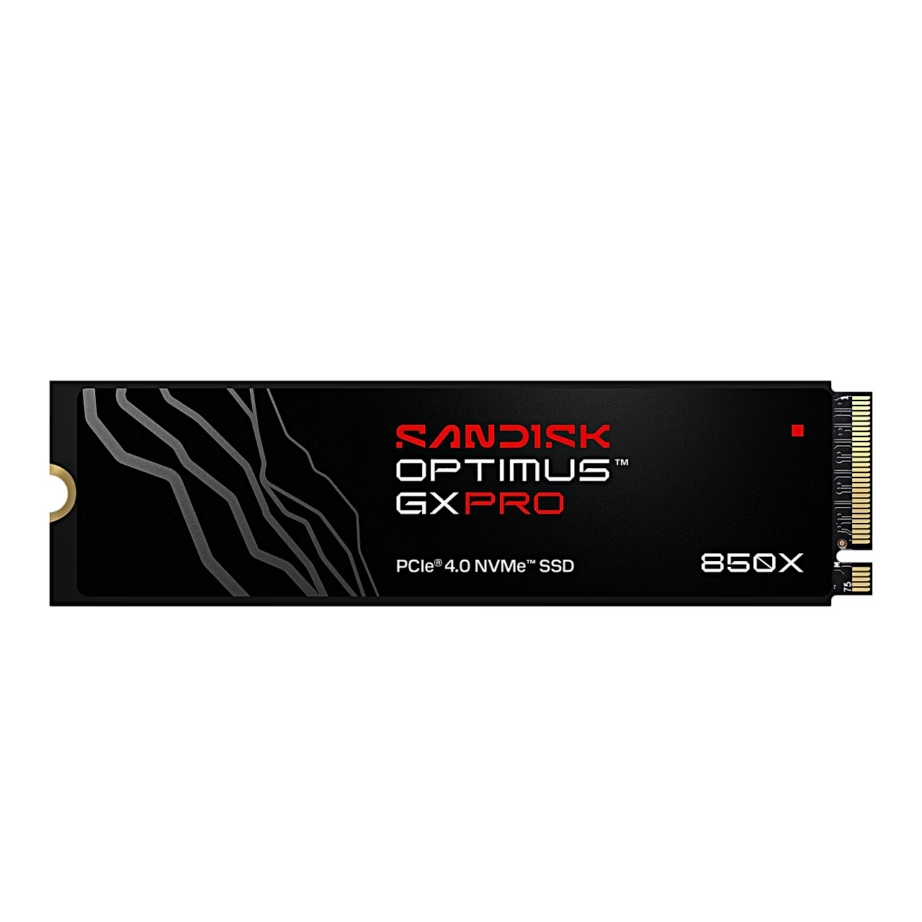
- SSD capacity
- 2 TB
- Form factor
- M.2
- Drive interface
- NVMe
- PCIe version
- PCIe 4.0
All products shown.