Brand
Shelly: Smart buttons and remotes
- 14-day right of return
- MQTT and WebSocket support

Why choose Shelly?
Shelly's strength in the smart home world is flexibility: the devices can be used both in a simple home setup and in more serious automation projects where local control and freedom of integration matter. With many Shelly devices you do not have to limit yourself to one app, because setup and control are also possible directly on the local network, and common integration methods such as MQTT and persistent control channels (e.g. WebSocket) are supported. This makes Shelly a good choice for users who build the logic themselves, whether in Home Assistant or another home automation platform.
Compared with ecosystems where sensors and switches require a central hub, Shelly offers a more "direct connection" approach. At the same time, the brand also has a more professional installation direction: the Pro series, designed for the electrical distribution board, with a wired LAN connection and DIN rail mounting logic. The result is a system that is easy to expand, to diagnose faults in, and to connect with different standards as needed.
The Shelly selection in our online shop
In the Ruumist Ruumi online shop, the Shelly range centres on the core needs of a smart home: switching, measuring, control and collecting inputs. Relay modules and smart switches suit controlling lights and consumers (including dry-contact solutions and variants with energy consumption measurement), smart controllers help bring scenes and control together in one place, and sensors provide the triggers that automation needs. The selection also includes smart home accessories that simplify installation, connection and system expansion.
The logic of the series helps you choose the right approach. Shelly Gen4 is aimed at users who want multi-protocol connectivity in one device, including built-in Matter support. The Shelly Pro Series is intended for the distribution board environment: DIN rail mounted modules that support LAN and are convenient when you want a stable connection and automation that lives in the board. Shelly BLU offers buttons and sensors that communicate over Bluetooth and are well suited to triggering scenes or detecting motion, opening and other events, if you prefer low-energy solutions.
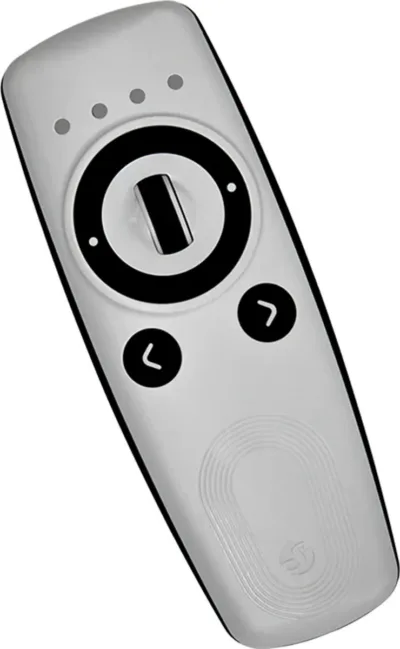
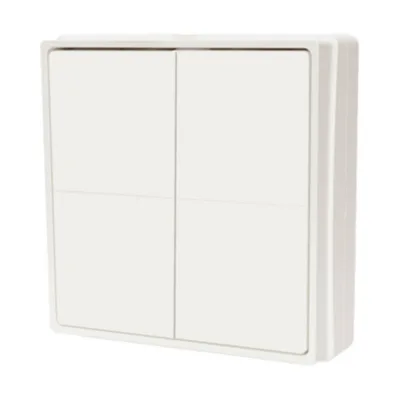
If your goal is, for example, energy monitoring, the Shelly selection includes energy consumption measuring solutions both at the level of individual consumers and as energy meters that fit into the board. If the focus is convenience, buttons, remote controls and control panels are available, with which you can trigger automation even without a phone.
What to consider when choosing a Shelly product?
Start with connectivity and the ecosystem. If your home already has a set platform, check the product page to see whether it is compatible (e.g. Google Home, Amazon Alexa, SmartThings, Home Assistant or Apple HomeKit) and whether the connection works over Wi-Fi, Zigbee, Bluetooth or Matter. If you plan local integrations, also review the protocols: Shelly devices often support MQTT, HTTP/HTTPS and WebSocket, which is important especially for automation and logging.
Second, think about installation. For relay modules designed for a wall box, what matters is whether you have the necessary power supply and wiring (including whether the specific solution requires a neutral conductor). If you install in the distribution board, the DIN rail form factor and LAN connection of the Pro series are often the clearest choice. For switching, choose whether you need a dry contact (e.g. an input for a gate, garage or boiler) or direct load switching, and whether you also want energy consumption measurement.
Third, look at channels and inputs. A multi-channel solution helps you control several circuits with one device, while a single-channel module is simple and compact. For sensors and buttons, practical criteria are the installation location (indoor space, more humid environment), the housing's durability, the power source, and how the signal reaches your automation. Once you have worked through these points, it is easy to filter the suitable Shelly solution for a specific project in the product grid.
Frequently asked
Yes. Many Shelly devices allow local network-based control, including through the built-in web interface and integrations such as MQTT. This suits you well if you want to manage automation on site (e.g. in Home Assistant).
The choice depends on your ecosystem and installation location. Wi-Fi suits devices placed directly behind the router, Zigbee lets you build a separate smart network, Bluetooth is popular for low-energy buttons and sensors, and Matter simplifies compatibility if your central device supports it. The product page always states the connectivity separately.
The Pro series is designed for DIN rail mounting in the electrical distribution board and usually offers convenient board installation and the option of a LAN connection. Wall box modules are more compact and intended for fitting behind a switch or close to the consumer. Choose according to the logic of the installation.
Yes, Shelly is a popular choice among Home Assistant users, especially when the goal is local control and automation. The exact setup route depends on the model and on whether you use MQTT or the platform's native integration, for example.
It depends on the specific model and connection diagram. Some Shelly solutions require a neutral conductor, while others are designed for neutral-less situations too. Before buying, check the technical data and diagram on the product page and, if necessary, consult an electrician.
-
38,95 €
- Product type
- Remote control
- Connectivity
- Bluetooth
- Smart home platform
- Home Assistant
-
24,95 €
- Product type
- Rechargeable battery
- Connectivity
- Bluetooth, Zigbee
- Smart home platform
- Amazon Alexa, Google Home, Samsung SmartThings
-
23,95 €
- Product type
- Remote control
- Connectivity
- Bluetooth, Zigbee
- Smart home platform
- Home Assistant
-
28,95 €
- Connectivity
- Bluetooth
-
-
-
All products shown.