Pillows
Choosing a pillow: filling, size and height
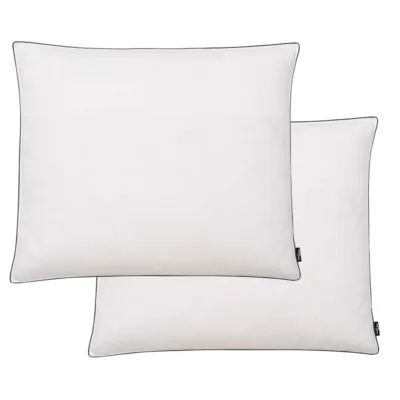
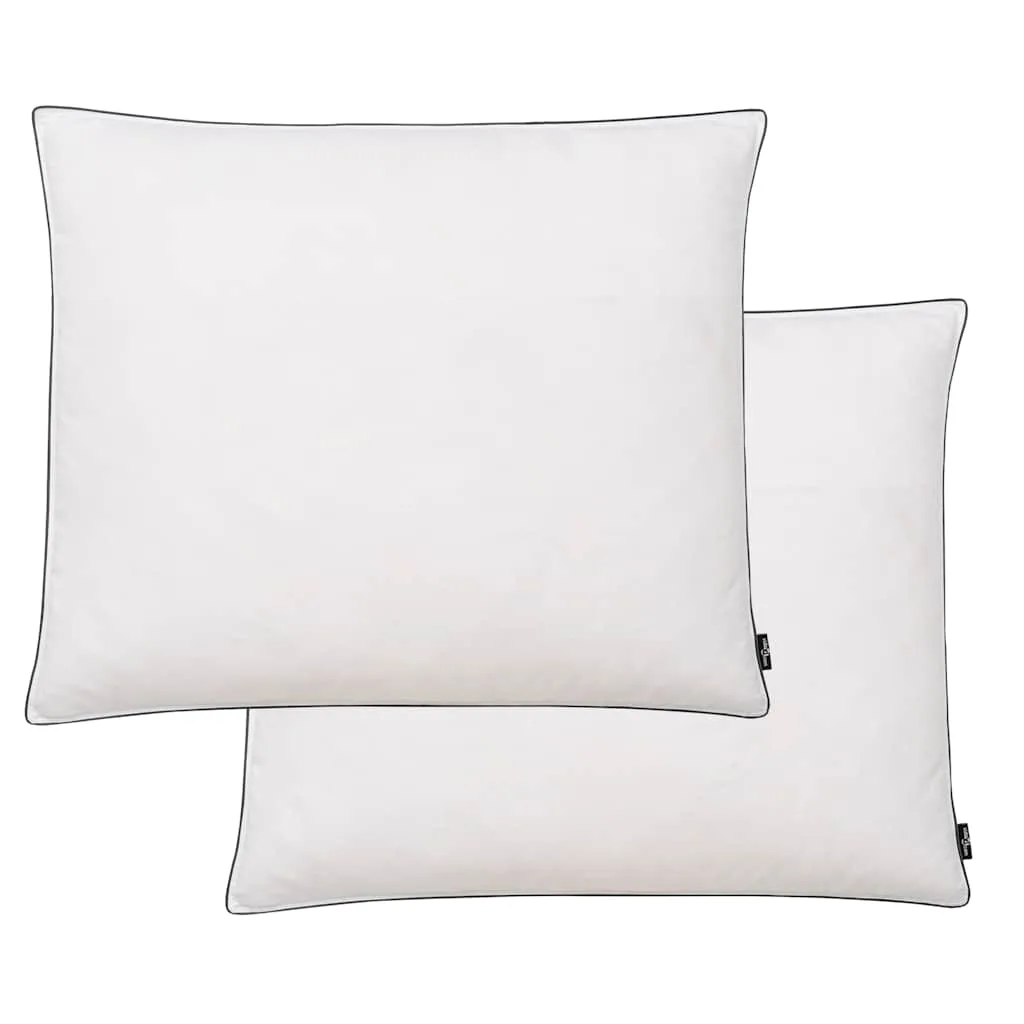
A pillow supports your head and neck so that your spine stays straight during sleep. Here you will find light feather and down pillows and a long side pillow that supports your knees and belly when you sleep on your side. We sell pillows. The choice depends on the filling, the size and the height that suits your sleeping position.
Filling: feather, down or synthetic
Down is light and soft and keeps you warm, while feather gives the pillow more support and springiness. The feather and down mix is stated in percentages, for example 90/10, where the larger number is the share of down. A pillow with synthetic fibre is easy to wash and suits those who prefer a pillow without animal filling.
Size and pillowcase
The most common pillow sizes are 50 x 60 cm and 50 x 70 cm, larger pillows are 60 x 70 cm and 60 x 80 cm. Choose the pillowcase to match the size of the pillow; you will find a suitable one on our Bedding page. You can filter by size to choose the right dimensions.
Height for your sleeping position
A side sleeper needs a higher and firmer pillow that fills the space between the shoulder and the ear. A back sleeper suits a pillow of medium height, and a stomach sleeper needs a low, soft pillow so that the neck stays straight. A person with broad shoulders needs a higher pillow than a person with narrow shoulders.
Side pillow: during pregnancy and when sleeping on your side
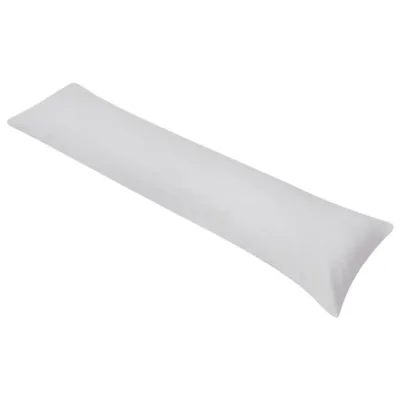
A side pillow is a long body pillow: the 40 x 145 cm pillow reaches from the head to the knees. You hold it in your arms or between your knees, so your hips stay in line and your lower back can rest. During pregnancy the same pillow supports your belly and back when you sleep on your side. You will find a duvet that matches the pillow on our Duvets page.
Frequently asked questions
A side sleeper needs a pillow whose height matches the distance between the shoulder and the neck, usually a high or medium-high pillow. When the height is right, your head and spine are in one line.
Lie on your side, place the upper part of the pillow under your head or in your arms and the lower part between your knees. The pillow supports both your belly and your hips and reduces the strain on your lower back.
An allergy is often caused by dust mites rather than the feather itself. The pillow cover is made of dense fabric that keeps the filling inside. For someone sensitive to dust mites, a pillow that can be washed at 60 °C and a pillow protector that is washed together with the bedding are suitable.
The washing temperature and method are stated on the care label of the pillow. A feather pillow is washed in a large washing machine on a gentle programme and dried thoroughly; drying balls help the feathers stay fluffy in the dryer. A large pillow can also be taken to dry cleaning.
Fold the pillow in half: if it does not spring back on its own, the filling has sunk and the pillow no longer supports your neck. A synthetic pillow usually lasts 2 to 3 years, while feather and down pillows last longer.