
Wet and dry vacuums
Choosing a wet and dry vacuum: tank capacity, power source and filter
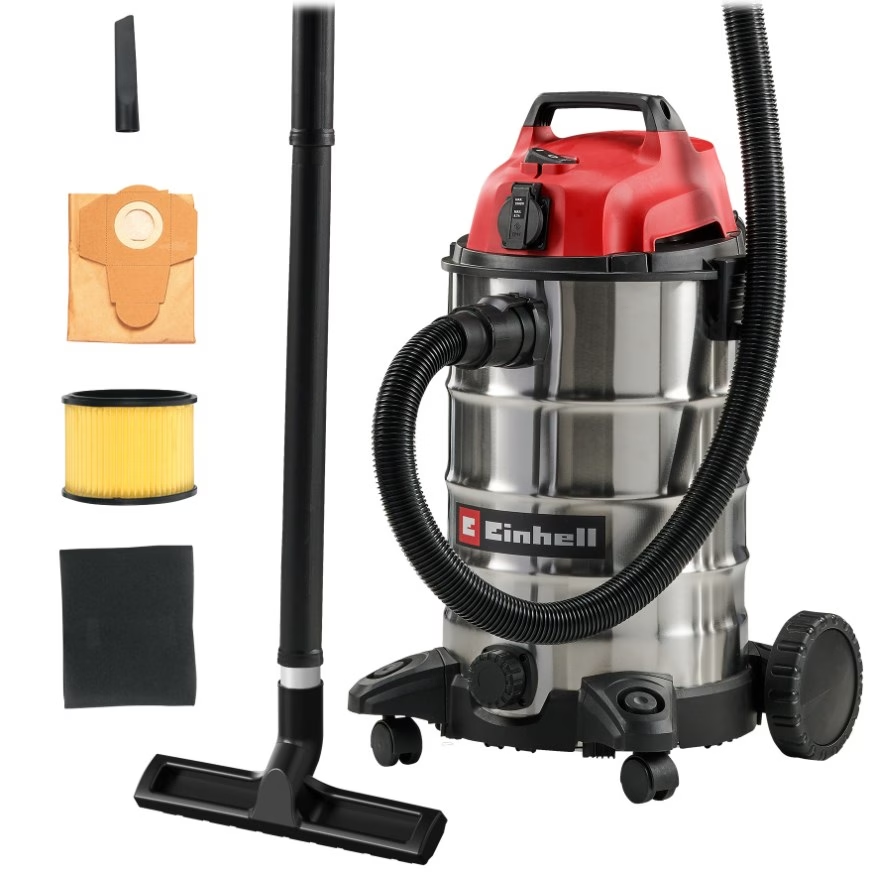
A wet and dry vacuum, also called a wet/dry vac, sucks up both dry debris and water, which is why it is used in construction, the garage, the cellar and for car cleaning. The range includes vacuums from Einhell, DeWalt, Scheppach, Stanley, Camry and Cecotec. Tank capacity, power source and whether the vacuum can be connected to a power tool are what decide the purchase.
Tank capacity: 10-20 or 20-30 litres
A vacuum with a 10-20 litre tank is light and suits the car, the garage and smaller repairs. A 20-30 litre tank holds construction debris and a larger volume of water, so it needs emptying less often. When sucking up water, the float on most models shuts off suction once the water level reaches the top of the tank.
Power source: mains or battery
A mains-powered vacuum runs without interruption and suits longer construction and cleaning jobs. A battery vacuum uses the manufacturer’s power tool battery, usually 18 V, and works where there is no power socket, for example on a boat or in the yard of a summer house. Many battery models are sold without the battery and charger, which is stated in the product name.
Power and suction
Power in watts shows the motor’s electricity consumption. Suction is better described by the vacuum pressure (mbar or kPa) and the airflow (l/s), which are listed in the technical data on the product page.
Power tool socket and blowing
A vacuum with a power tool socket switches on together with the sander, saw or router connected to it and sucks up dust directly from the work area. Many models let you connect the hose to the blower outlet to blow leaves or debris out of corners.
Filter and hose
For dry debris a filter bag goes in the tank; when sucking up water, the paper bag is removed and a filter suitable for wet use is fitted. For plaster, concrete and wood dust a HEPA or fine dust filter suits, keeping fine particles in the tank. The hose diameter is usually 32-36 mm. You will find filters and bags on the Accessories for vacuum cleaners page.
Frequently asked questions
A wet and dry vacuum has a large tank, a wide hose and a filter that can be used wet, so it sucks up water, gravel, sawdust and construction debris. For everyday cleaning at home, a vacuum cleaner with a dust bag with floor and carpet brushes is intended.
For plaster, render and concrete dust, use the filter bag together with a HEPA or fine dust filter; the bag then collects most of the dust before it reaches the filter. Shake or clean the filter during work so that suction stays strong.
A wet and dry vacuum is intended for water and water-based dirt, for example for sucking up a flooded cellar, rainwater or floor washing water. Petrol, solvents and hot ash require a device designed for them.
Yes, with a narrow nozzle and brush it cleans seats, floor mats and the boot. A battery model works in the car without an extension cable.
A wet and dry vacuum sucks up water but usually does not spray washing liquid. For washing hard floors, a floor washer is suitable, as it washes and sucks up at the same time.
-
121,99 €
- Volume
- 30 l
- Power
- 900 W
- Power supply
- Mains power
-
95,99 €
- Volume
- 20 l
- Power supply
- Mains power
-
114,99 €
- Volume
- 30 l
- Power
- 1600 W
- Power supply
- Mains power
-
207,99 €
- Volume
- 75 l
- Power
- 550 W
-
140,99 €
- Volume
- 65 l
- Power
- 1200 W
- Power supply
- Mains power
-
155,99 €
- Volume
- 10 l
- Power supply
- Rechargeable battery
-
-
120,99 €
- Volume
- 30 l
- Power
- 1600 W
- Power supply
- Mains power
-
126,99 €
- Volume
- 23 l
- Power
- 800 W
- Power supply
- Mains power
-
109,99 €
- Volume
- 25 l
- Power
- 3400 W
- Power supply
- Mains power


All products shown.
Popular right now
-
109,99 €
- Volume
- 25 l
- Power
- 3400 W
- Power supply
- Mains power