
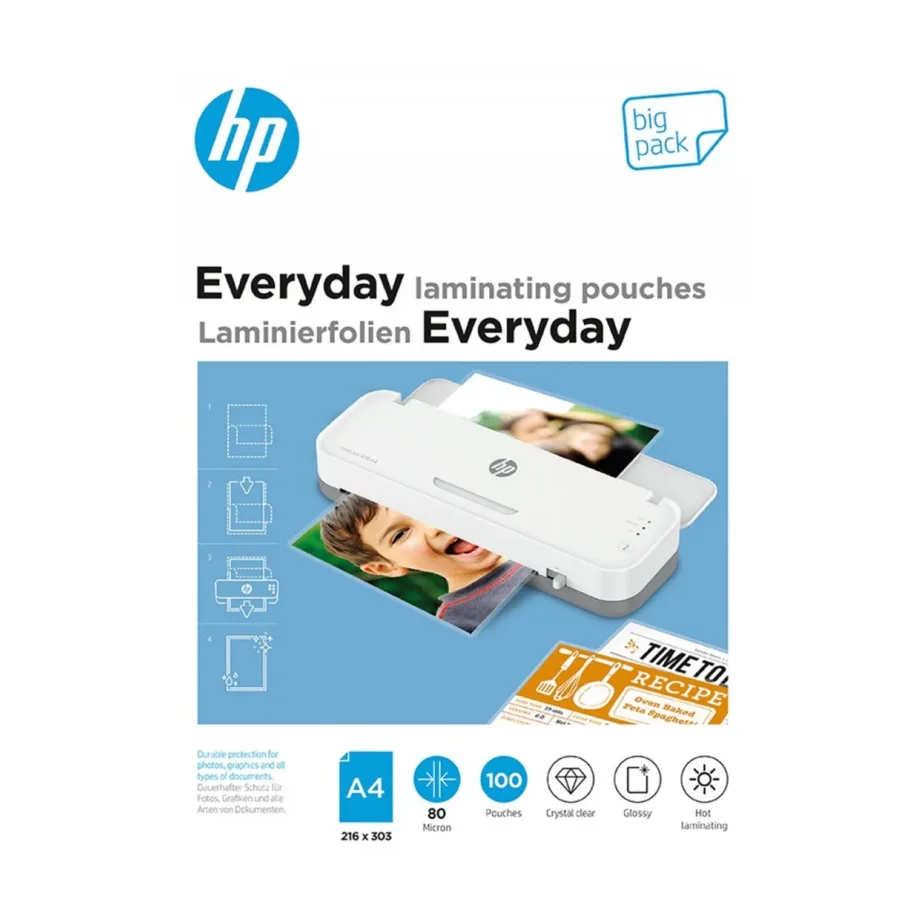
Laminating pouches
Choosing laminating pouches: size, thickness and laminator compatibility
A laminating pouch is a sealed plastic sleeve made of two layers, into which you place a document, photo or sign, and which fuses into a tight protective layer in a hot laminator. The range includes HP and Tracer A4 and A3 pouches. Two things decide the purchase: the pouch size must match your document, and the thickness must suit your laminator.
Paper size: A4 or A3
The pouch is slightly larger than the document, so that a sealed edge remains around it. An A4 pouch is about 216 × 303 mm and suits a standard office sheet, certificate and menu. An A3 pouch is about 303 × 426 mm and suits posters, timetables and drawings. An A3 pouch needs an A3-width laminator.
Pouch thickness in microns
The thickness is stated per layer: an 80-micron pouch is 160 microns in total. 75-80 microns gives a flexible result that suits everyday documents and sheets kept in a folder. 100-125 microns makes the sheet rigid, which suits a menu, a sign and a guide that is often handled. 175-250 microns has the stiffness of a card and needs a laminator that supports thick pouches.
Quantity per pack
Pouches are usually sold in packs of 25, 50 or 100. For occasional use at home a smaller pack suits, while schools and offices use the 100-piece pack.
Glossy or matt finish
A glossy pouch makes colours brighter and is the most common choice. A matt pouch reflects less light, so text on a wall or under a light is easier to read.
What to check on the laminator
Check the largest size and the largest pouch thickness in your laminator’s user manual and choose a pouch within those limits. For thicker pouches, set a higher temperature or a slower speed on the laminator if this is possible. You will find laminators on the page Laminators, and you can trim the edges of a finished sheet straight with a paper trimmer.
Frequently asked questions
80 microns is the thickness of one layer, so the two layers of the pouch together come to 160 microns. Manufacturers usually state the thickness this way, sometimes as 2 × 80 mic.
A pouch fits if its size and thickness are within the limits of the laminator. Most home and office laminators work with 75-125 micron pouches, and a thicker pouch needs a device designed for it.
A photo printed on ordinary photo paper with an ordinary printer can be hot laminated. Thermal paper, such as a shop receipt, turns black when heated, and for that a cold laminating pouch is suitable, which bonds with adhesive without heat.
A cloudy spot usually means the temperature was too low for a thick pouch: feed the pouch through again or choose a slower speed. Bubbles form from damp paper or dust, so place a dry, clean sheet inside the pouch.
A finished laminated sheet can be cut with scissors or a paper trimmer. Leave a sealed border of 2-3 mm around the document, so the pouch stays tightly sealed and moisture cannot get in.
-
21,99 €
- Paper size
- A4
- Film thickness
- 80 µm
- Quantity per pack
- 100 pcs
-
24,99 €
- Paper size
- A4
- Film thickness
- 80 µm
- Quantity per pack
- 100 pcs
-
28,99 €
- Paper size
- A4
- Film thickness
- 125 µm
- Quantity per pack
- 100 pcs
-
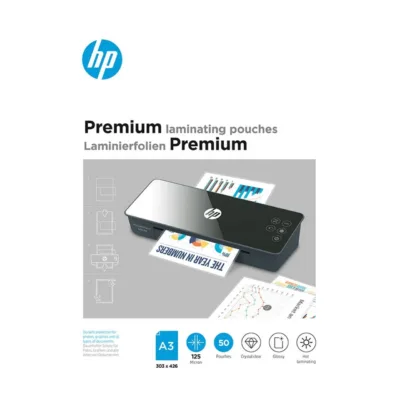
32,99 €
- Paper size
- A3
- Film thickness
- 125 µm
- Quantity per pack
- 50 pcs
-
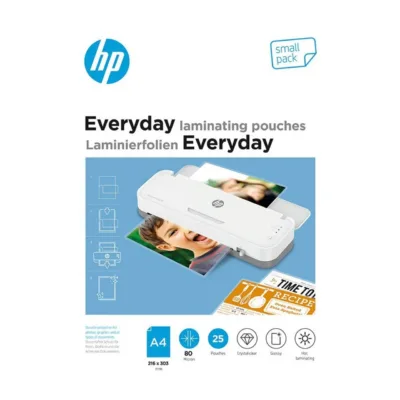
8,49 €
- Paper size
- A4
- Film thickness
- 80 µm
- Quantity per pack
- 25 pcs
All products shown.
Popular right now
-
21,99 €
- Paper size
- A4
- Film thickness
- 80 µm
- Quantity per pack
- 100 pcs