

Description
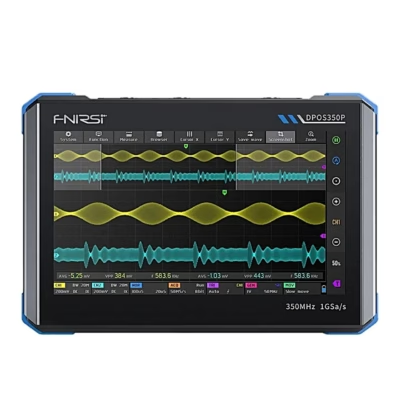
Oscilloscope with two channels and a touchscreen
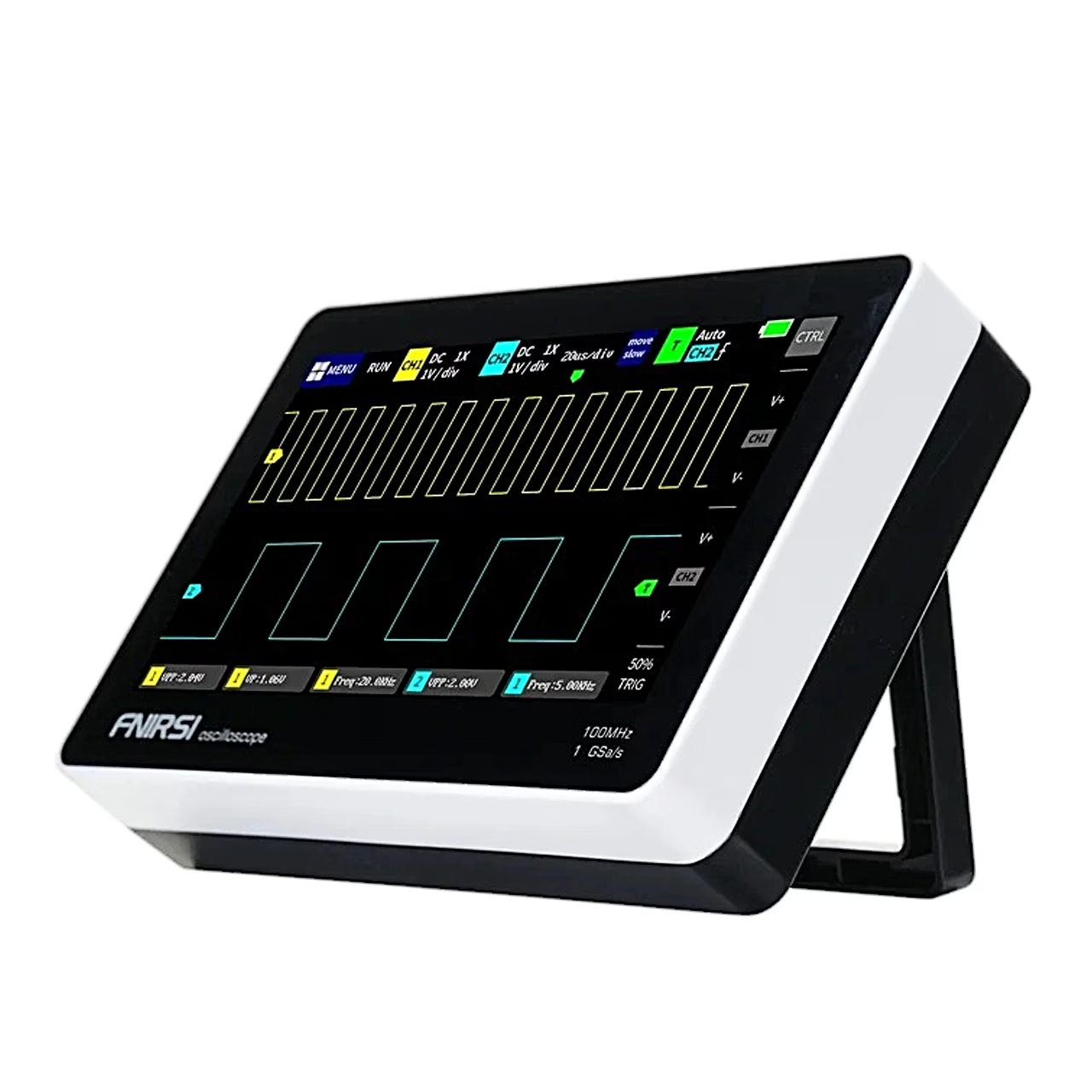
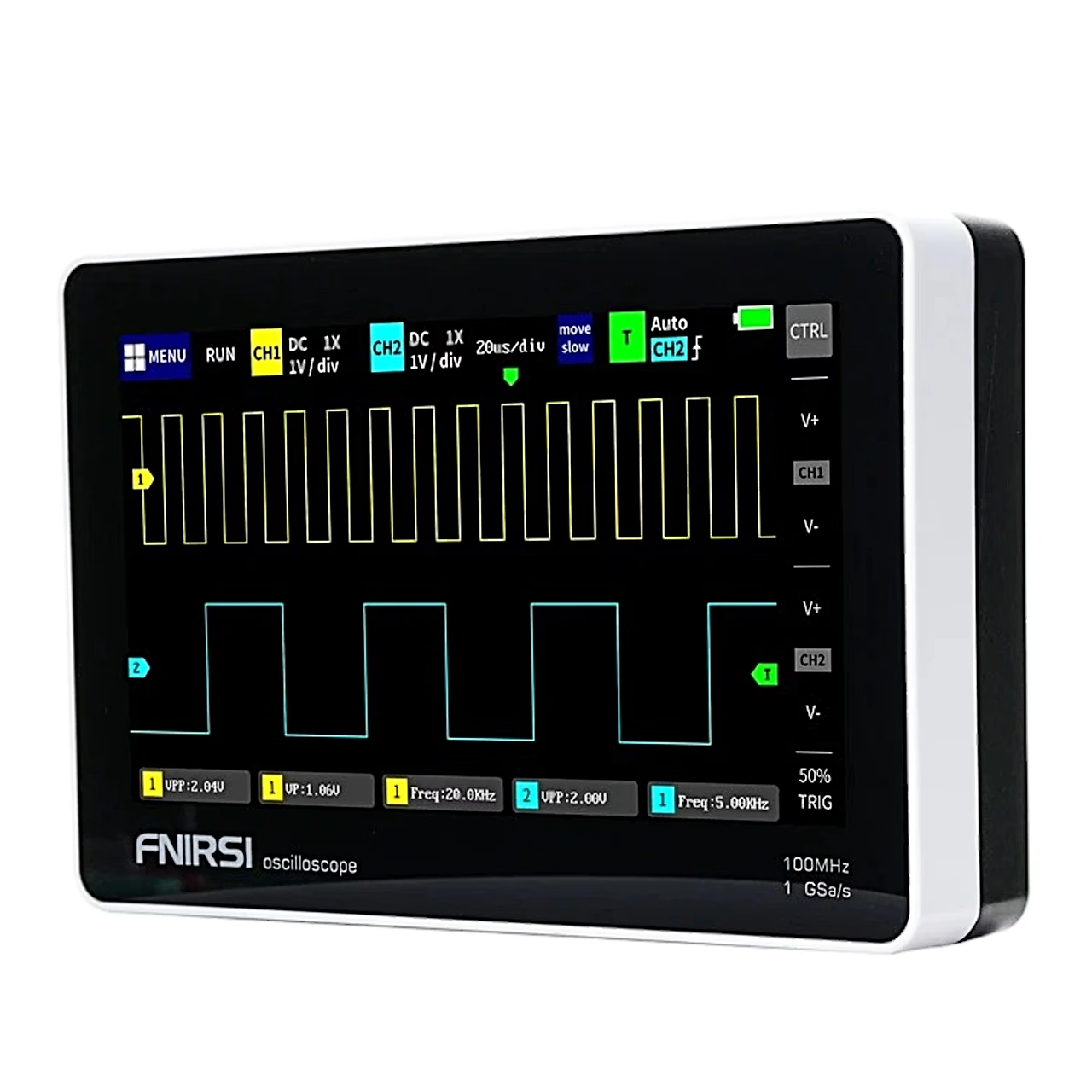
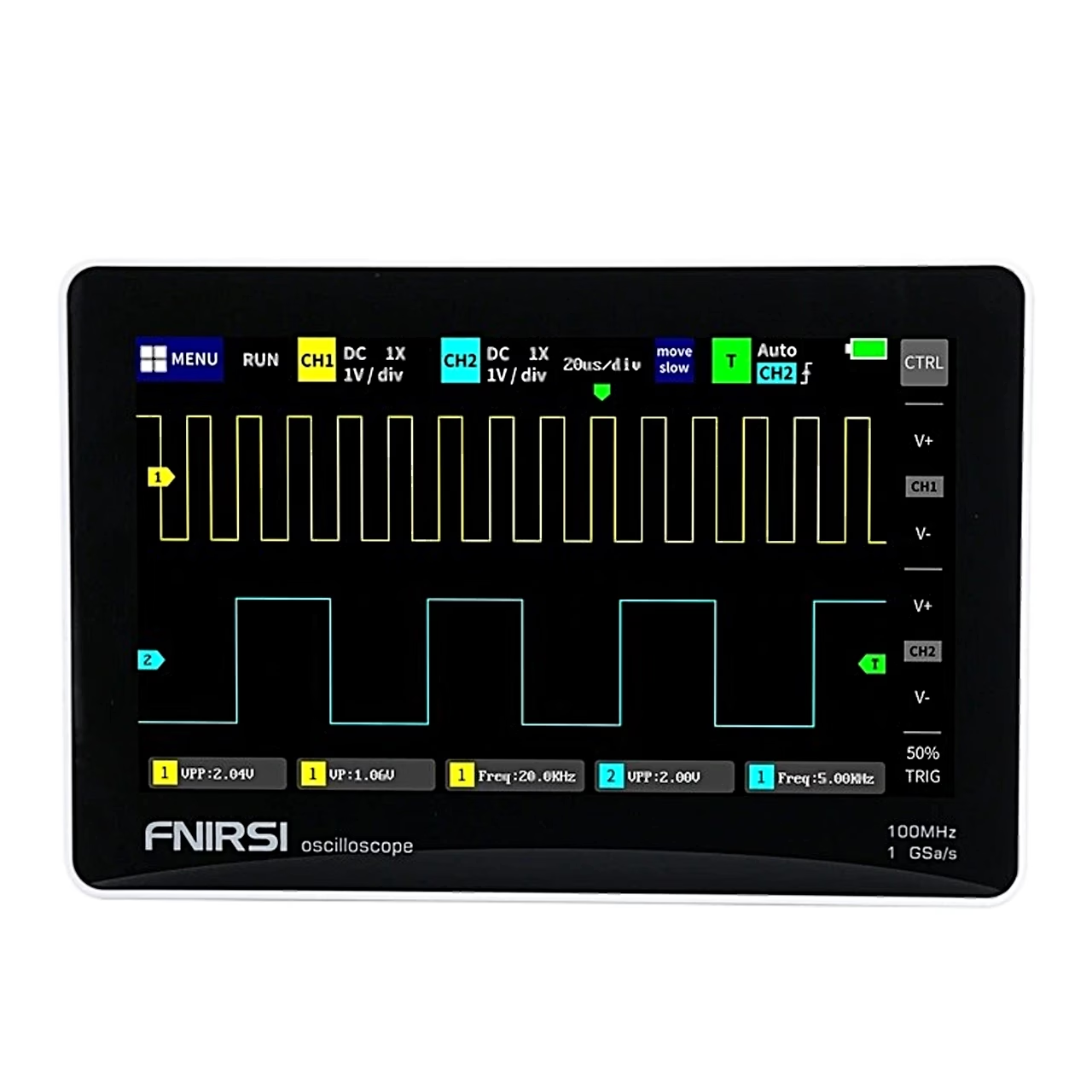
The tablet-style FNIRSI 1013D oscilloscope measures two signals at once with 100 MHz analogue bandwidth and a 1 GSa/s real-time sampling rate. Its hardware uses the same ARM + FPGA + ADC architecture as benchtop oscilloscopes.
Touchscreen and cursor measurement
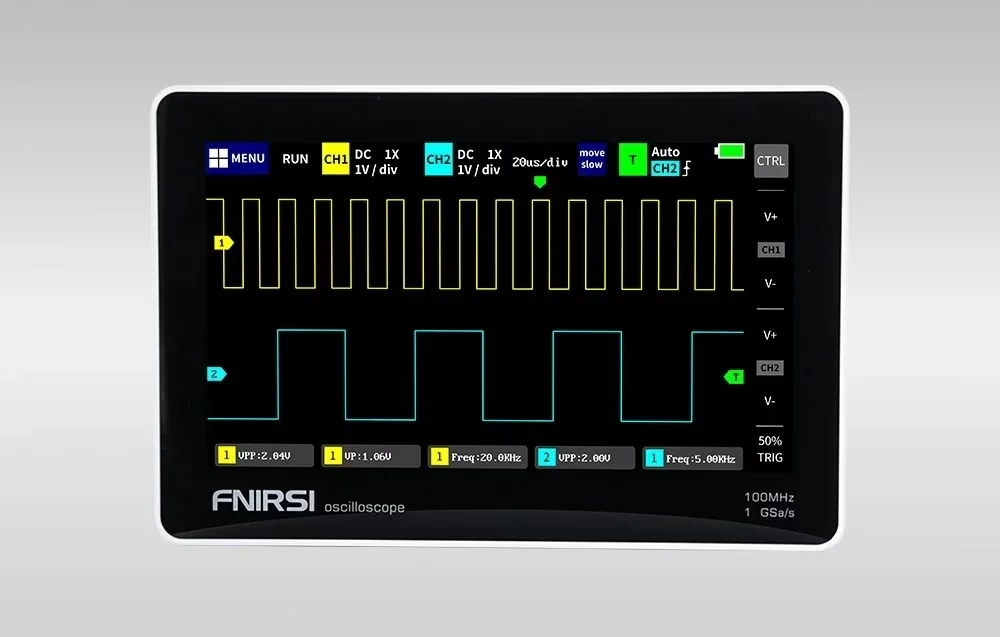
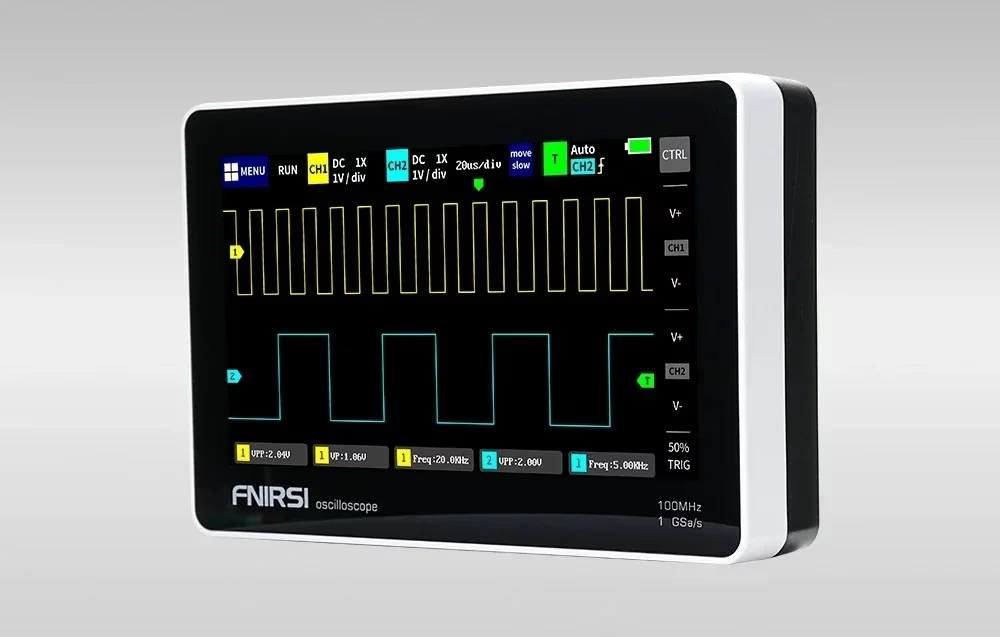
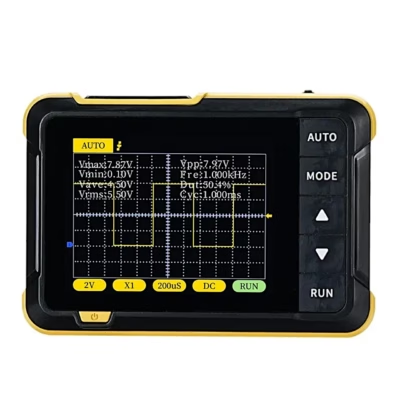
The capacitive 7-inch TFT screen with 800 × 480 pixels responds to taps and gestures. Waveforms can be zoomed and moved directly on screen, and time and voltage cursors read amplitude, period and frequency. Up to 12 measurement parameters can be shown.
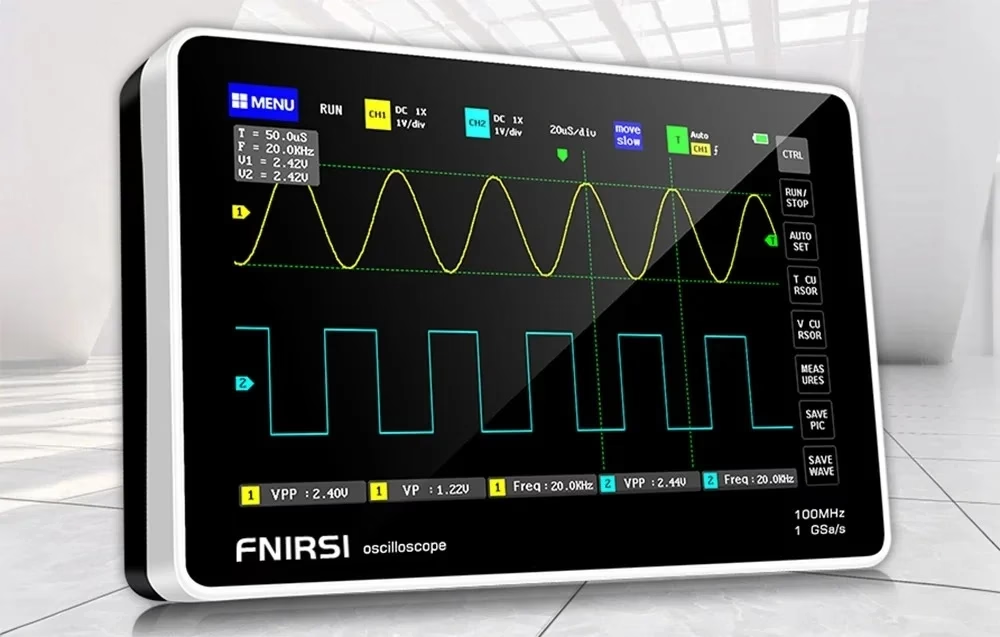
Two channels, XY mode and FFT
Each channel has 1 MΩ input resistance, AC or DC coupling and a 1X, 10X or 100X probe ratio. Display modes are Y-T, roll for slow time bases and X-Y, where the Lissajous figure of two signals shows their frequency and phase relationship. FFT analysis shows the harmonic components of a signal.
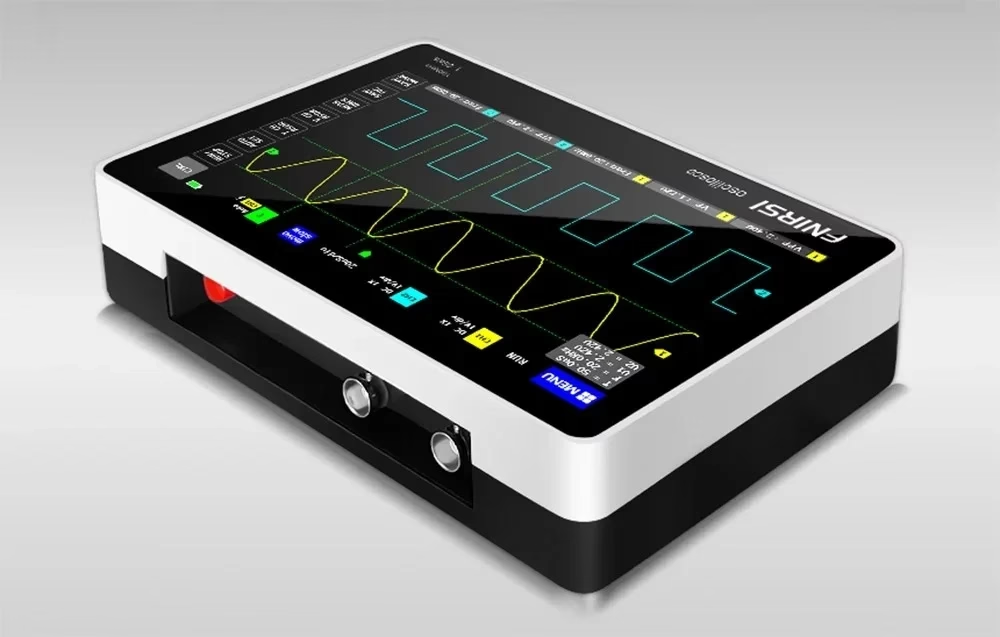
Trigger and auto set
Trigger modes are auto, normal and single, and the trigger responds to a rising or falling edge of the selected channel. One-button auto set detects the signal and applies suitable settings. With the automatic 50% trigger the trigger level stays at the middle of the peak-to-peak voltage.
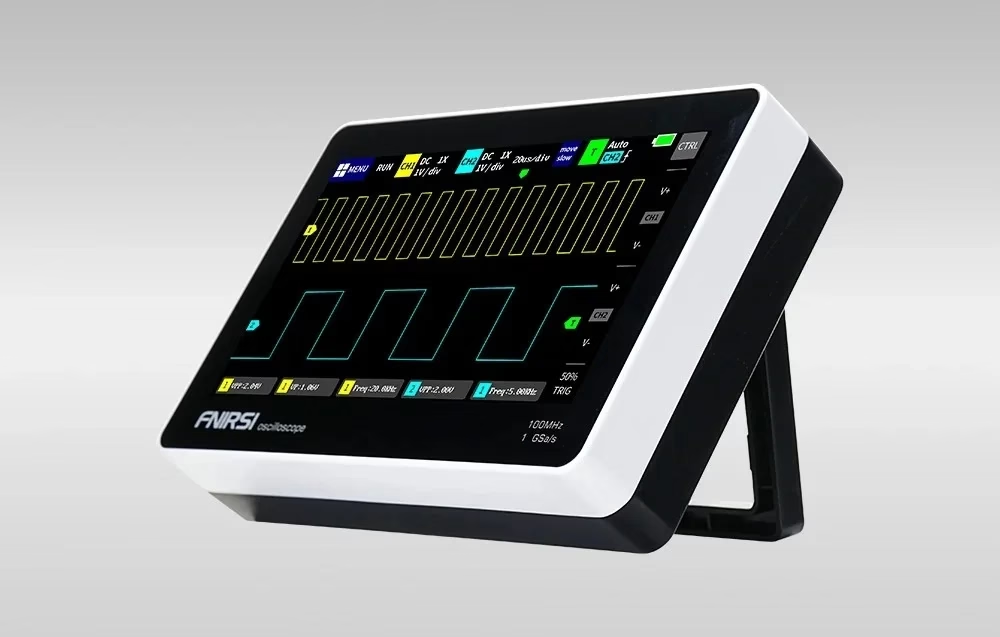
Input voltage and high-voltage protection
The maximum measurable voltage is 40 V with a 1X probe and 400 V with a 10X probe. Built-in high-voltage protection withstands up to 400 V continuous even when the probe is left at 1X. The probe bandwidth is 5 MHz at 1X and 100 MHz at 10X, so measure signals above 5 MHz at 10X.
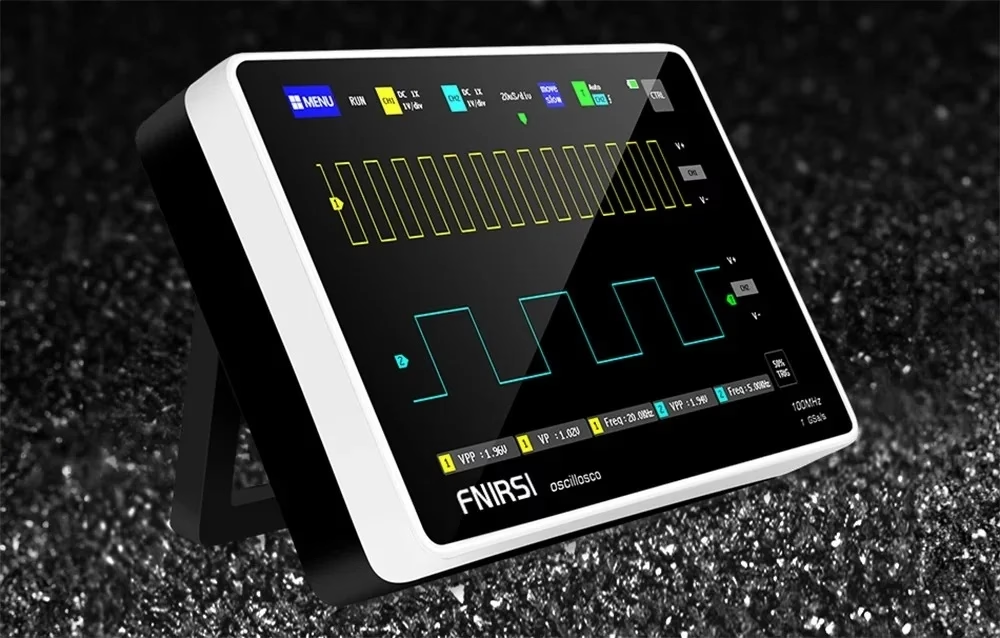
Saving and exporting to a computer
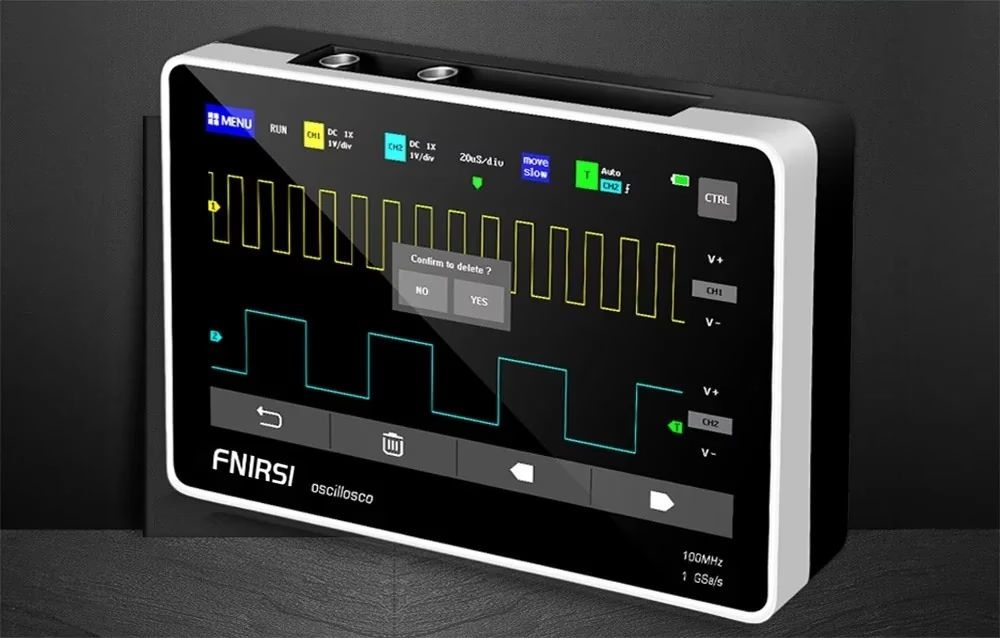
The 1 GB internal memory stores up to 1000 screenshots and 1000 sets of both channels’ waveforms, with 240 kpts memory depth. One-tap screenshot and waveform save buttons sit in the side bar. The file manager shows saved waveforms as thumbnails to browse, zoom, measure with cursors and delete. In USB sharing mode the memory opens on a computer as a USB drive.
Battery and charging
The built-in 6000 mAh lithium battery gives about 4 hours of use when fully charged. It charges through the USB-C port with the included 5 V/2 A charger.
Use and calibration
The probe handle switch and the channel probe ratio must be set the same. The housing has a 1 kHz calibration square-wave output for probe compensation. Baseline calibration is under Function, System settings, Baseline calibration, with the probes and USB charger disconnected.
In the box
- FNIRSI 1013D oscilloscope, 1 pc
- 100 MHz probe, 2 pcs
- USB charger
- User manual








































Reviews
There are no reviews yet.